

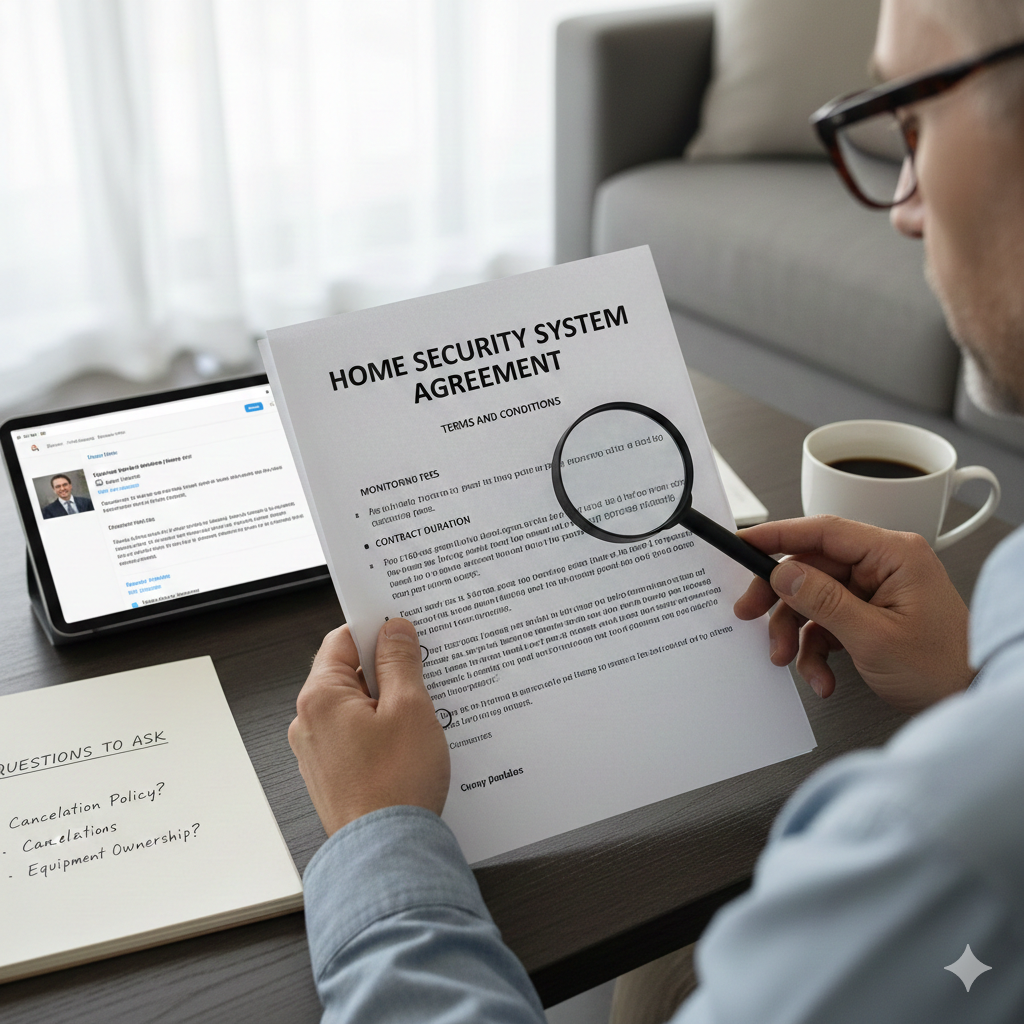
Signing up for a home security system is one of the most important decisions you’ll make to protect your home and family. But before the equipment is installed and the monitoring begins, there’s one crucial step many people rush through—or skip entirely: reading the contract.
Home security contracts are often filled with fine print, industry jargon, and legal language that can confuse even the savviest homeowner. Companies may offer appealing deals like “free installation” or “$0 equipment cost,” but these promotions often come with long-term obligations.
Understanding what you’re agreeing to prevents surprises such as hidden fees, automatic renewals, or high cancellation charges. In this guide, we break down every part of a home security contract, explain the terms you should look for, and highlight red flags to avoid—so you can sign with confidence.
Why Home Security Contracts Matter
Many people make the mistake of relying solely on promotional offers without reviewing the terms behind them. The contract explains:
- Your legal obligations
- What the provider is responsible for
- How long you're locked in
- How much you'll actually pay
- What happens if the system fails
- Your rights during cancellation or relocation
In short: the contract is the real deal—not the brochure.
Understanding the Most Important Parts of a Home Security Contract
Home security agreements can be long and complicated, but almost all include the following sections. Here’s what they mean and why each matters.
1. Contract Length (The Term Agreement)
This is one of the first things you should check. Some companies offer month-to-month plans, while others require 1-, 2-, or even 5-year contracts.
Why This Matters:
Longer contracts lock you into monthly payments and make it expensive to leave early. They may also auto-renew without your consent.
Questions to Ask:
- How long is the contract?
- Does it auto-renew?
- Can the renewal be canceled easily?
What happens if I move before the contract ends?
2. Cancellation Policy
Early termination fees are one of the biggest surprises for homeowners. Some companies charge the total remaining balance; others charge a percentage.
Why This Matters:
Life changes—moving, financial issues, or dissatisfaction with service happen. You should know your options.
Questions to Ask:
- What is the early cancellation fee?
- Can I cancel without penalty under specific conditions (moving, military deployment)?
- How do I cancel—in writing, email, phone?
3. Monthly Monitoring Costs
Promotional offers often hide the actual monitoring fee until the very end. Monitoring fees usually range from $15 to $60+ per month depending on features.
Why This Matters:
Monitoring is the backbone of your system. High fees or required upgrades can make the system more expensive than expected.
Questions to Ask:
- What is the monthly monitoring cost?
- Are there tiers?
- Does the cost increase after the first year?
- Are app access, video recording, and alerts included or extra?
4. Installation & Activation Fees
Many companies advertise “free installation,” but this may only apply to basic equipment—or may be tied to a long contract.
Why This Matters:
Setup fees can add unexpected upfront costs.
Questions to Ask:
- Is installation free?
- Are there activation or setup fees?
Are service calls or technician visits covered?
5. Equipment Ownership: Do You Own or Lease?
This is where many homeowners get surprised. Some companies lease equipment, meaning:
- You don’t actually own the devices
- You must return everything when canceling
- Damaged equipment may result in fees
Other companies let you buy the equipment outright.
Questions to Ask:
- Do I own or lease the equipment?
- If leased, what happens if it breaks?
What is the cost to upgrade?
6. Warranty & Repair Policies
Security equipment needs maintenance. A camera can fail, a sensor can stop communicating, or batteries can die.
Why This Matters:
Repair costs can add up quickly if not covered.
Questions to Ask:
- What is the warranty period?
- Does the company provide free replacements?
- Are service visits free or billed?
7. Service Call Fees
Many companies charge for technician visits—even if the system malfunctions due to their equipment.
Why This Matters:
Service call fees can range from $50 to $150 per visit.
Questions to Ask:
- Are service calls free during the contract?
- Is remote troubleshooting available?
When do service charges apply?
8. Moving or Relocation Policies
If you move homes, what happens to your contract?
Some companies offer:
- Free relocation
- Free reinstall
- Transfer to the new homeowner
Others may:
- Charge fees
- Require a new contract
- Force you to pay remaining balance
Questions to Ask:
- Can I transfer the service when moving?
- Is there a relocation fee?
- Will the new homeowner be able to take over my contract?
9. Monitoring Center Details
Monitoring centers should be UL-certified and operate 24/7. Some providers outsource monitoring to third parties.
Why This Matters:
Not all monitoring centers offer the same reliability or response time.
Questions to Ask:
- Is the monitoring center UL-certified?
- Is it in-house or outsourced?
- Are there redundant centers?
10. Automatic Renewal Clause
One of the most commonly overlooked sections is auto-renewal. Contracts often automatically extend by 12 or 24 months unless you provide written cancellation before a deadline.
Why This Matters:
Auto-renewals trap you in longer agreements without your knowledge.
Questions to Ask:
- When does the auto-renewal occur?
- How much notice must I give to stop renewal?
Does the contract renew at the same rate?
11. Price Increases
Some contracts allow companies to raise prices during your term.
Questions to Ask:
- Are price increases allowed?
- How much notice is required?
Can I cancel if prices rise?
12. Liability & Insurance Clauses
Many people assume that if a break-in occurs, the security company will cover losses. This is rarely true.
Most contracts include clauses limiting the company’s liability.
Questions to Ask:
- What is the company liable for?
- Are damages or losses covered?
- Do I need additional insurance?
Red Flags to Watch Out For
While reviewing contracts, watch for these warning signs.
1. High-Pressure Salespeople
If the salesperson urges you to “sign now or lose the deal,” walk away.
2. Hidden Fees
Common hidden fees include:
- Activation charges
- Equipment leasing fees
- Cancellation penalties
- Late payment fees
- Automatic storage charges
3. Vague Cancellation Terms
If the cancellation language is unclear, it’s likely intentional.
4. No Written Guarantee
Verbal promises mean nothing without written confirmation.
5. Limited Warranty
A short or vague warranty can lead to expensive repairs later.
6. Mandatory Multi-Year Contracts
Especially if paired with high cancellation costs.
How to Protect Yourself Before Signing
Here’s a simple checklist to ensure you enter a fair agreement.
✔ Ask for the full contract before installation
Never let a technician show up before you review the terms.
✔ Read every clause
Pay attention to anything labeled “terms,” “obligations,” or “fees.”
✔ Highlight anything unclear
Then ask the provider to explain it in plain language.
✔ Request written confirmation
If a salesperson promises something, get it in writing.
✔ Compare at least three companies
Don't feel obligated to accept the first offer.
Conclusion
A home security contract is more than legal paperwork—it defines your financial and legal responsibilities for years to come. Understanding the terms, fees, and obligations helps you avoid costly surprises and ensures you’re truly protected.
By learning how to spot red flags, asking the right questions, and taking your time reviewing the agreement, you can confidently choose a security provider that matches your needs and budget.
Your security system should give you peace of mind—not contract anxiety.
FAQs
Q. Why are home security contracts so long?
Because companies subsidize equipment and installation costs, they often require multi-year contracts to recover expenses.
Q. Can I cancel a home security contract early?
Usually, yes—but cancellation fees can be high. Always check the early-termination clause before signing.
Q. Do all home security companies require contracts?
No. Many modern providers offer month-to-month or contract-free options.
Q. What is the most common hidden fee in these contracts?
Equipment leasing fees, service call charges, and automatic renewal terms are among the most common.
Q. Should I choose a contract or a no-contract system?
If you want flexibility, go no-contract. If you prefer lower up-front equipment costs, a contract might be beneficial.