

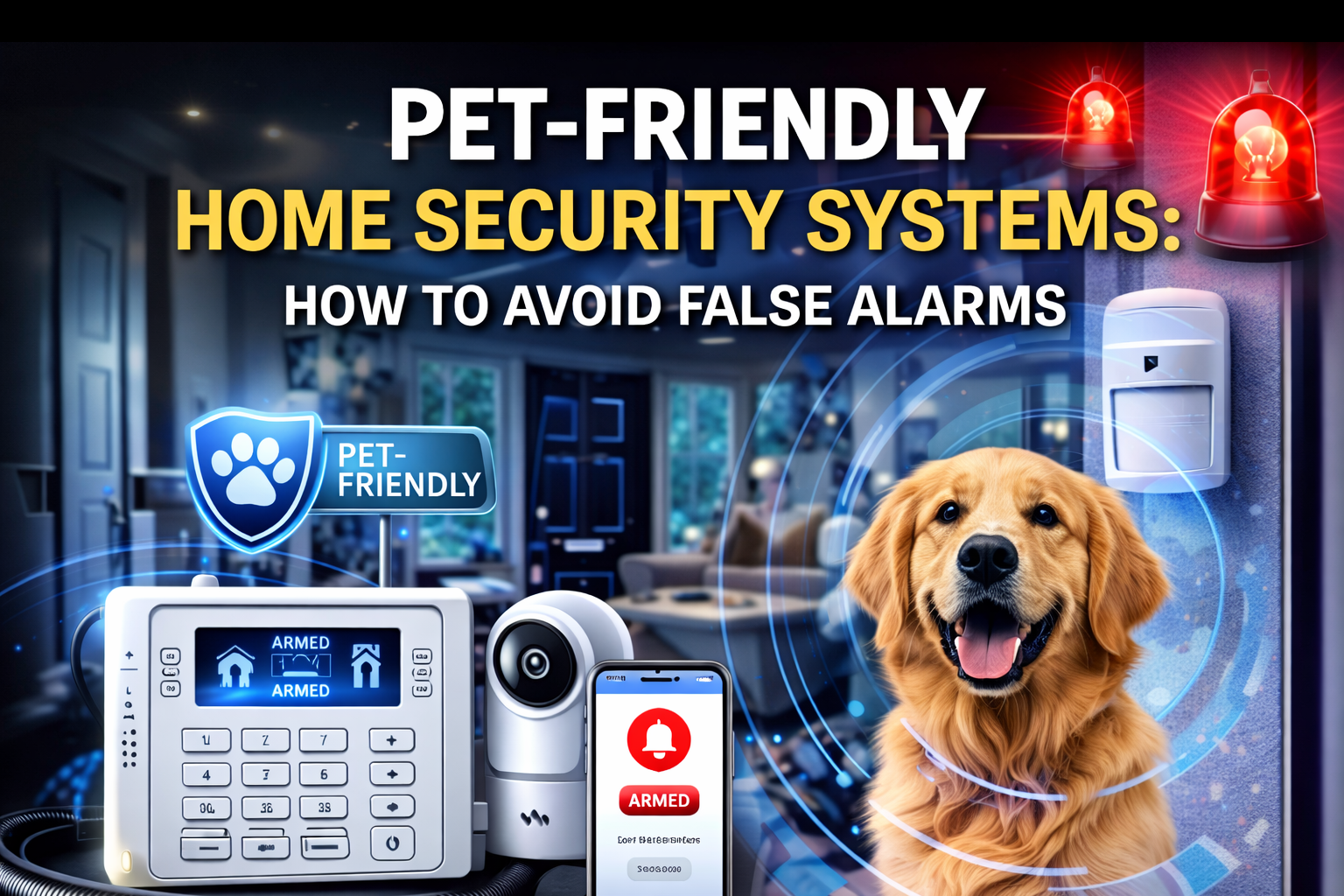
If you’ve ever had your home alarm go off because your dog jumped on the couch or your cat decided to sprint across the room at 2 AM - you’re not alone. Pets and security systems don’t always get along.
The good news? You don’t have to choose between protecting your home and keeping your furry friend comfortable. Modern home security systems are smarter and can be configured to ignore pets while still detecting real threats.
Let’s break down how pet-friendly security works and how you can avoid those frustrating (and embarrassing) false alarms.
Why Pets Trigger False Alarms
Traditional motion sensors aren’t always smart enough to tell the difference between a burglar and a playful pet.
Common Reasons
- Movement detection without context
- Sensors picking up body heat
- Pets jumping on furniture
- Small animals moving quickly
To a basic sensor, your cat might look like a tiny intruder.
What Makes a Security System Pet-Friendly?
A pet-friendly system is designed to detect human-sized motion while ignoring smaller, harmless movement.
Key Features
- Pet-immune motion sensors
- Adjustable sensitivity settings
- Smart AI detection
- Strategic sensor placement
It’s not about ignoring movement - it’s about understanding it.
Understanding Pet-Immune Motion Sensors
How They Work
Pet-immune sensors are typically designed to ignore movement below a certain weight threshold.
Typical Thresholds
- Up to 20 lbs (9 kg)
- Up to 40 lbs (18 kg)
- Some advanced models up to 80 lbs (36 kg)
They analyze:
- Size of the moving object
- Heat signature
- Distance from the sensor
Advantages of Pet-Immune Sensors
- Reduced false alarms
- Reliable detection of humans
- Peace of mind for pet owners
Limitations to Keep in Mind
- Large pets may still trigger alarms
- Pets climbing furniture can confuse sensors
- Incorrect installation reduces effectiveness
Even smart sensors need smart setup.
Best Types of Sensors for Pet Owners
1. PIR (Passive Infrared) Sensors
Why They Work Well
- Detect heat and movement
- Less sensitive to small animals
Best For
- Indoor areas with small to medium pets
2. Dual-Technology Sensors
How They Help
- Combine PIR and microwave detection
- Require both signals to trigger an alarm
Benefits
- Extremely low false alarm rates
- Ideal for homes with multiple pets
3. AI-Powered Smart Sensors
What They Do
- Use machine learning to identify pets vs humans
Advantages
- Continuous improvement over time
- Highly accurate detection
Proper Sensor Placement Matters
Even the best sensor won’t work properly if it’s placed incorrectly.
Placement Tips
- Install sensors at recommended height (usually 6–8 feet)
- Avoid pointing sensors directly at pet areas
- Keep sensors away from stairs or furniture pets climb
- Aim sensors across rooms, not downward
Think of placement like camera angles - it changes everything.
Adjusting Sensitivity Settings
Most modern systems allow you to customize sensitivity levels.
What to Do
- Lower sensitivity if pets trigger alarms
- Test settings with your pet’s normal activity
- Adjust gradually for best results
Trial and error is part of the process.
Create Pet-Free Zones for Sensors
Designate certain areas where pets don’t go and place sensors there.
Examples
- Entryways
- Hallways
- Staircases
This ensures maximum security without interference.
Use Alternative Security Measures
Motion sensors aren’t the only line of defense.
Other Pet-Friendly Options
Door and Window Sensors
- Detect entry without relying on motion
- Completely pet-proof
Security Cameras with AI Detection
- Identify humans vs animals
- Provide visual verification
Glass Break Sensors
- Trigger only when glass shatters
- Ignore pet movement entirely
Layering your system improves reliability.
Training Your Pets Can Help
Believe it or not, your pet’s behavior plays a role.
Helpful Habits
- Discourage jumping on furniture near sensors
- Limit access to certain rooms
- Establish consistent routines
A well-trained pet reduces unexpected triggers.
Common Mistakes Pet Owners Make
Avoid these pitfalls:
- Installing sensors too low
- Ignoring pet weight limits
- Placing sensors near heat sources
- Forgetting to test the system
- Allowing pets to roam freely in monitored zones
Small mistakes can lead to big frustrations.
How to Test Your System with Pets
Before relying on your system, test it thoroughly.
Testing Steps
- Arm your system
- Let your pet move naturally
- Observe if alarms trigger
- Adjust settings if needed
Repeat until you find the sweet spot.
Benefits of a Pet-Friendly Security System
1. Peace of Mind
- No unnecessary panic
- Confidence in your system
2. Fewer False Alarms
- Avoid fines or embarrassment
- Reduce stress
3. Better Security Accuracy
- Focus on real threats
- Faster response times
Balancing Safety and Comfort
Your home should feel safe for both you and your pets.
A good system:
- Protects your home
- Respects your pet’s space
- Works seamlessly in daily life
Security shouldn’t come at the cost of comfort.
The Future of Pet-Friendly Security
Technology is evolving quickly.
What to Expect
- Smarter AI detection
- Improved pet recognition
- Custom profiles for individual pets
- Integration with pet tracking devices
Soon, systems may recognize your pet as well as you do.
Conclusion
Having pets doesn’t mean compromising on home security. With the right combination of pet-immune sensors, proper placement, smart settings, and alternative security measures, you can enjoy a system that works for both you and your furry companions.
Avoiding false alarms isn’t about turning off your system - it’s about fine-tuning it. When done right, your security setup becomes smarter, more reliable, and completely pet-friendly.
Because at the end of the day, your home should protect everyone in it - two-legged and four-legged alike.
FAQs
Q. What is a pet-immune motion sensor?
Its a sensor designed to ignore movement from pets below a certain weight while still detecting human activity.
Q. Can large dogs trigger motion sensors?
Yes, especially if they exceed the sensors weight threshold or jump on furniture.
Q. Are security cameras better for homes with pets?
Cameras with AI detection can reduce false alarms by distinguishing between pets and humans.
Q. Where should I place motion sensors if I have pets?
Place them in entry points and areas pets dont frequently access, avoiding direct paths of pet movement.
Q. How do I stop my alarm from going off because of my pet?
Use pet-friendly sensors, adjust sensitivity settings, and ensure proper placement away from pet activity zones.