

Vacations are meant for relaxation - not worrying about what’s happening back home. But here’s the truth: an empty house can be an easy target if it looks unoccupied. The good news? A few smart precautions can dramatically reduce your risk and give you real peace of mind while you’re away.
Think of home security during travel like packing a suitcase. You wouldn’t forget your passport, right? The same mindset applies here - prepare properly, and you’ll travel stress-free.
Let’s walk through practical travel tips and a simple security checklist to keep your home safe while you’re gone.
Why Homes Are Targeted During Travel
Burglars don’t usually pick homes at random.
They look for signs that no one’s around:
- Overflowing mail or packages
- Dark houses night after night
- Unmoved trash bins
- Social media posts announcing vacations
An empty home that “announces” it’s empty becomes tempting. Your goal? Make your home look lived-in - even when it’s not.
Pre-Travel Home Security Tips
1. Don’t Advertise Your Trip Online
It’s exciting to share travel plans, but posting “Leaving for Hawaii for two weeks!” tells the wrong audience exactly what they need to know.
Instead:
- Post photos after you return
- Avoid sharing travel dates publicly
- Adjust social media privacy settings
Oversharing can unintentionally invite trouble.
2. Secure All Doors and Windows
This sounds obvious, but it’s often rushed.
Before leaving:
- Double-check every window
- Lock sliding doors securely
- Reinforce back or basement entries
- Consider door security bars for added strength
A quick walkthrough can prevent easy entry.
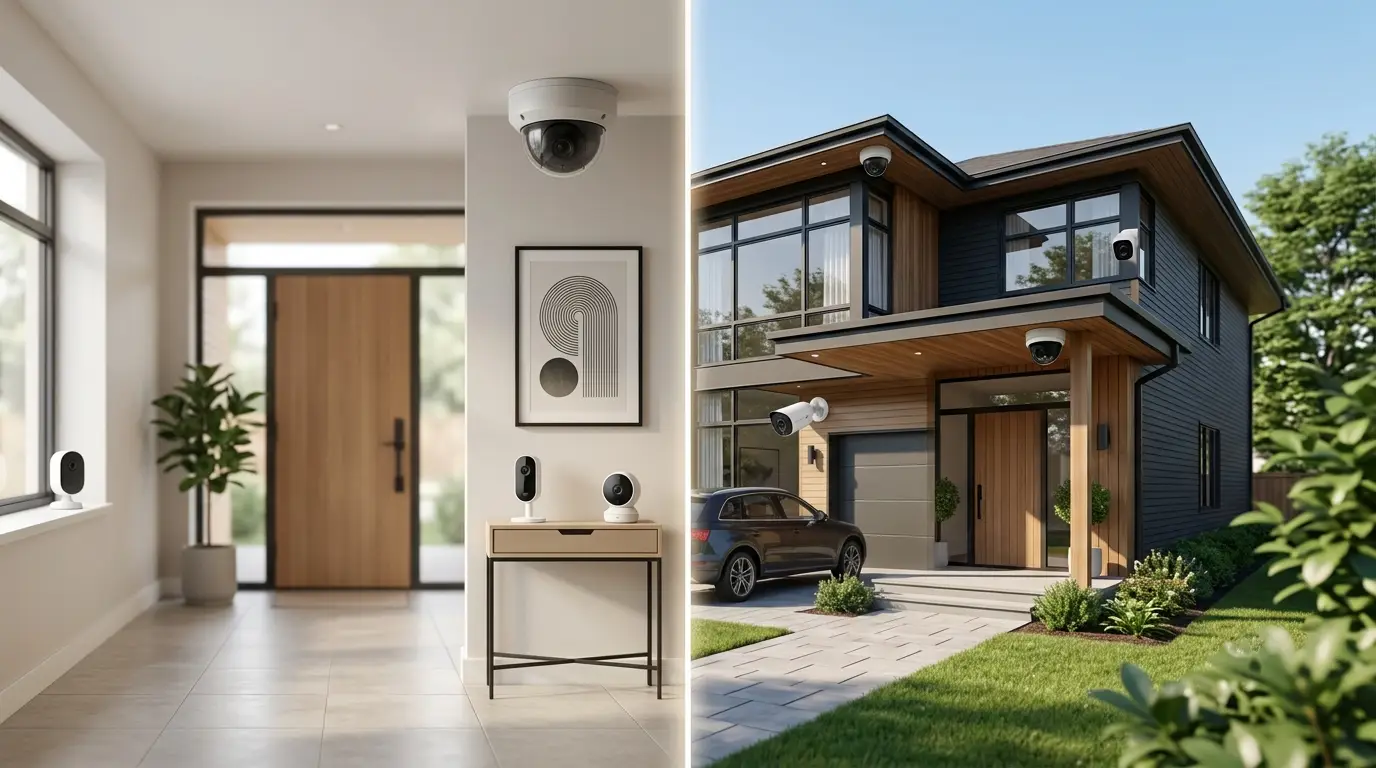
3. Install or Activate a Home Security System
If you have a system, make sure it’s fully activated before you leave.
If you don’t, consider:
- Smart alarms with mobile alerts
- Video doorbells
- Motion-activated cameras
- 24/7 professional monitoring
Modern systems allow you to check in anytime from your phone. That’s powerful reassurance.
4. Use Smart Lighting to Mimic Activity
A dark house for days is a red flag.
Use:
- Timers on indoor lights
- Smart bulbs with random scheduling
- Outdoor motion-activated lighting
Lights turning on and off naturally can make your home look occupied.
5. Pause Mail and Deliveries
An overflowing mailbox screams “no one’s home.”
Options include:
- Placing a temporary hold on mail
- Asking a trusted neighbor to collect packages
- Using parcel lockers for deliveries
Small details matter.
6. Inform a Trusted Neighbor
Good neighbors are underrated security assets.
Ask them to:
- Keep an eye on your property
- Park in your driveway occasionally
- Report unusual activity
It’s like having a backup security system powered by community.
7. Secure the Garage
Garages are often overlooked - and vulnerable.
Before leaving:
- Lock the interior door connecting garage to house
- Unplug automatic garage openers if possible
- Avoid leaving spare keys inside
An unsecured garage can become an easy entry point.
8. Adjust Thermostats and Utilities
Security isn’t just about break-ins. It’s also about preventing damage.
Set your thermostat to:
- Prevent pipes from freezing in winter
- Avoid overheating in summer
Also:
- Turn off unnecessary appliances
- Shut off water if leaving for extended periods
Prevention saves money and stress.
9. Store Valuables Safely
Even with precautions, extra protection helps.
- Use a home safe for jewelry and documents
- Avoid obvious hiding spots (like under mattresses)
- Consider safety deposit boxes for high-value items
If someone breaks in, make it harder for them to walk away with anything important.
10. Test Your Security Equipment
Before leaving, check:
- Camera angles and recordings
- Alarm sensors
- Motion detectors
- Mobile notifications
It’s better to discover a dead battery now than from a beach 1,000 miles away.
Travel Security Checklist
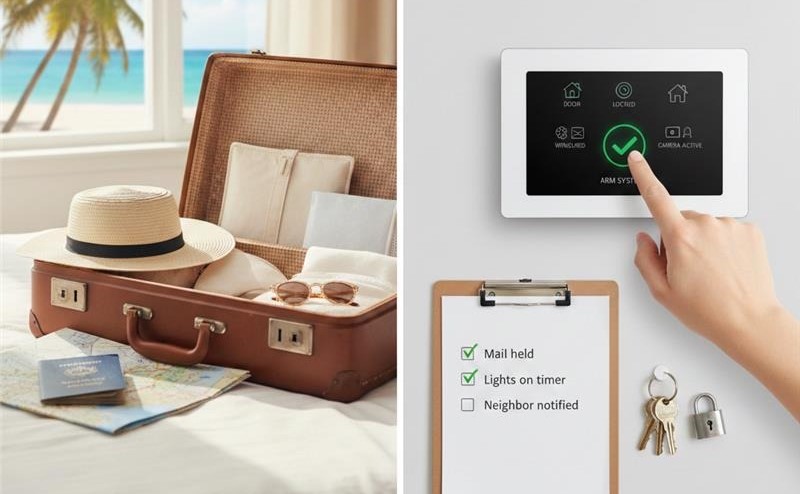
Here’s a simple, practical checklist you can follow before every trip:
Exterior Security
✔ Lock all doors and windows
✔ Activate security system
✔ Set lighting timers
✔ Secure garage
✔ Remove spare keys from obvious hiding spots
✔ Trim shrubs near entry points
Interior Protection
✔ Store valuables in a safe
✔ Unplug non-essential electronics
✔ Adjust thermostat
✔ Turn off water (if long trip)
✔ Test alarm and camera systems
Community & Deliveries
✔ Pause mail service
✔ Arrange package pickup
✔ Inform trusted neighbor
✔ Schedule lawn care if needed
Digital Security
✔ Avoid posting travel dates online
✔ Enable security system alerts
✔ Turn on two-factor authentication for smart home apps
Save this list. Use it before every trip.
Extra Protection for Long-Term Travel
Going away for a month or more? Step it up.
Consider:
- Professional monitoring services
- Temporary house-sitting
- Smart leak detectors
- Automatic blinds for realistic daily routines
Longer absences require layered security.
What to Do If You Notice Suspicious Activity While Away
Even with preparation, things can happen.
If your security app sends an alert:
- Check live camera feeds.
- Contact your monitoring service (if applicable).
- Call local authorities if needed.
- Notify your neighbor.
Avoid confronting situations remotely or contacting suspicious individuals directly.
Stay calm. Respond logically.
Balancing Peace of Mind and Paranoia
There’s a difference between being cautious and being anxious. Smart travel security is about preparation - not fear.
Once you’ve taken the right steps:
- Trust your system
- Avoid constant camera checking
- Enjoy your trip
Security should support your life, not control it.
Common Mistakes Travelers Make
Avoid these common errors:
- Leaving a spare key under the mat
- Forgetting to lock second-floor windows
- Leaving blinds fully closed (which looks unnatural)
- Turning off all lights for weeks
- Ignoring security app updates
Sometimes the smallest oversight creates the biggest vulnerability.
Conclusion
Travel should feel exciting - not stressful. Protecting your home while you’re away doesn’t require complicated strategies or expensive upgrades. It requires awareness, preparation, and a smart checklist.
By securing entry points, using smart technology, involving trusted neighbors, and avoiding public oversharing, you significantly reduce your home’s risk. Think of it as locking the door to worry before you head out the door to adventure.
Prepare well. Travel confidently. Come home to exactly the way you left it.
FAQs
Q. Should I leave lights on while on vacation?
Use timers or smart lighting instead of leaving lights on constantly. Randomized schedules look more natural.
Q. Is it safe to post vacation photos in real time?
It is safer to post after you return home to avoid signaling that your house is empty.
Q. Do I really need a security system while traveling?
While not mandatory, security systems greatly reduce risk and allow remote monitoring for peace of mind.
Q. How can I protect packages while away?
Pause deliveries, use parcel lockers, or ask a trusted neighbor to collect them.
Q. What is the most important step before leaving home?
Double-check that all doors and windows are locked and activate your security system before departure.