

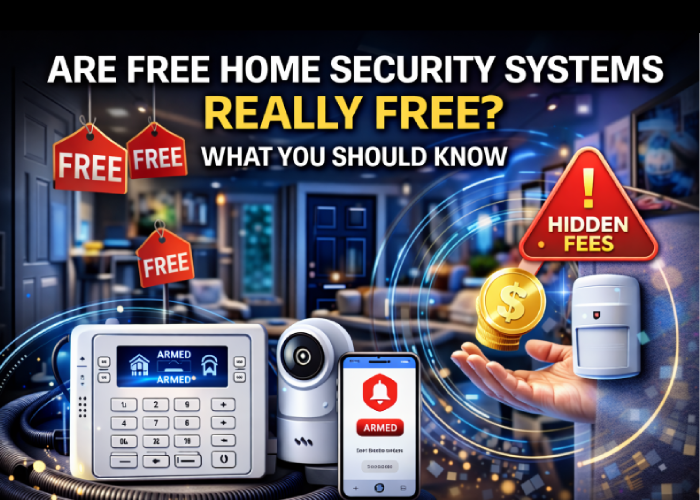
“Get a free home security system today!”
Sounds like a no-brainer, right? Who wouldn’t want protection for their home without paying upfront?
But here’s the reality - free rarely means completely free. In most cases, there’s a catch. Sometimes it’s small and reasonable. Other times, it can cost you more in the long run than buying a system outright.
So before you jump on that tempting offer, let’s break down what “free” actually means in the world of home security - and how to avoid costly surprises.
What Does “Free” Really Mean?
When companies advertise a free home security system, they’re usually referring to the equipment, not the entire service.
What’s Typically Free
- Basic equipment (control panel, sensors, keypad)
- Standard installation (sometimes)
What’s Not Free
- Monthly monitoring fees
- Premium features
- Upgrades and add-ons
Think of it like getting a free phone - but paying for the plan.
How Companies Make Money on “Free” Systems
If they’re giving away hardware, how do they profit?
Business Model Explained
- Long-term contracts
- Monthly subscription fees
- Upselling advanced features
- Charging for maintenance or upgrades
The “free” offer is often just the entry point.
Hidden Costs You Should Watch Out For
This is where things get interesting - and sometimes frustrating.
1. Monthly Monitoring Fees
Most free systems require a paid monitoring plan.
Typical Costs
- $10 to over $60 per month(or more depending on provider)
What You Get
- 24/7 monitoring
- Emergency response services
- Mobile app access
Over time, these fees add up significantly.
2. Long-Term Contracts
Many free system offers come with contracts lasting 1–3 years.
What to Look For
- Early termination fees
- Automatic renewals
- Limited flexibility
Cancel early, and you might pay more than the system is worth.
3. Installation Charges
Some companies advertise free equipment but charge for installation.
Possible Fees
- Professional installation costs
- Activation fees
- Service call charges
Always read the fine print.
4. Equipment Upgrades
The “free” system is often the most basic version.
Extra Costs For
- Additional sensors
- Smart cameras
- Video doorbells
- Smart locks
Once you start upgrading, costs can rise quickly.
5. Maintenance and Repairs
Not all plans include maintenance.
Potential Expenses
- Battery replacements
- Device repairs
- Service visits
These costs may not be obvious upfront.
Pros of Free Home Security Systems
Despite the catches, free systems aren’t always bad.
1. Low Upfront Cost
- No large initial investment
- Easy entry into home security
Great for budget-conscious users.
2. Professional Installation
- Experts set up the system
- Less hassle for homeowners
Convenience can be a big plus.
3. Access to Advanced Features
Even basic plans often include:
- Mobile app control
- Real-time alerts
- Emergency monitoring
Cons of Free Home Security Systems
1. Higher Long-Term Costs
Monthly monitoring fees add up over time, often costing more than buying a system upfront.
2. Limited Flexibility
Long-term contracts restrict your ability to cancel or switch providers easily.
3. Basic Equipment
Free packages usually include only essential devices, with advanced features costing extra.
4. Upselling Pressure
Providers often push upgrades and add-ons, increasing your overall expenses.
Free vs Paid Systems: Which Is Better?
It depends on your needs and priorities.
Free Systems Are Better If You:
- Want low upfront costs
- Prefer professional monitoring
- Don’t mind contracts
Paid Systems Are Better If You:
- Want full ownership
- Prefer no monthly fees
- Like DIY installation
Questions to Ask Before Choosing a Free System
Don’t sign up blindly. Ask these questions:
Important Questions
- What is included for free?
- What are the monthly costs?
- Is there a contract?
- Are there cancellation fees?
- What features require upgrades?
Clarity now prevents regret later.
Tips to Avoid Hidden Costs
Stay smart and protect your wallet.
Smart Tips
- Read the fine print carefully
- Compare multiple providers
- Calculate total cost over time
- Avoid unnecessary upgrades
- Choose flexible plans when possible
Think long-term, not just upfront savings.
Are Free Systems Worth It?
The answer isn’t black and white.
They Are Worth It If:
- You value convenience
- You want professional monitoring
- You understand the long-term cost
They Are Not Worth It If:
- You want full control
- You dislike contracts
- You prefer one-time payments
It’s all about what works for you.
Real Cost Example
Let’s break it down simply:
Scenario
- Free system upfront
- $30 month monitoring
- 24-month contract
Total Cost
$30 × 24 = $720
That “free” system suddenly isn’t so free.
The Psychology Behind “Free” Offers
Why are we so drawn to free deals?
Reasons
- Feels like low risk
- Creates urgency
- Reduces hesitation
But smart consumers look beyond the label.
Final Thoughts Before You Decide
Free home security systems can be a great starting point - but only if you understand what you’re signing up for.
The key is simple:
- Look beyond the word “free”
- Understand the total cost
- Choose what fits your lifestyle
Because real security isn’t just about protecting your home - it’s about making informed decisions.
Conclusion
So, are free home security systems really free? Not exactly. While they eliminate upfront costs, they often come with monthly fees, contracts, and upgrade expenses that add up over time.
That doesn’t mean they’re a bad choice. For many homeowners, they offer convenience and reliable protection. But the key is awareness. When you understand the full picture, you can decide whether a free system is truly worth it - or if a paid alternative makes more sense.
In the end, the best security system is one that protects both your home and your budget.
FAQs
Q. Are free home security systems completely free?
No, they usually include free equipment but require paid monitoring plans and contracts.
Q. Do free systems require contracts?
Most do, often ranging from 1 to 3 years with cancellation fees.
Q. Can I use a free system without monthly fees?
Typically no, as monitoring services are required for full functionality.
Q. Are free systems good for beginners?
Yes, they are a good entry point for those new to home security.
Q. What is the biggest drawback of free systems?
The long-term cost, which can exceed the price of buying a system outright.