

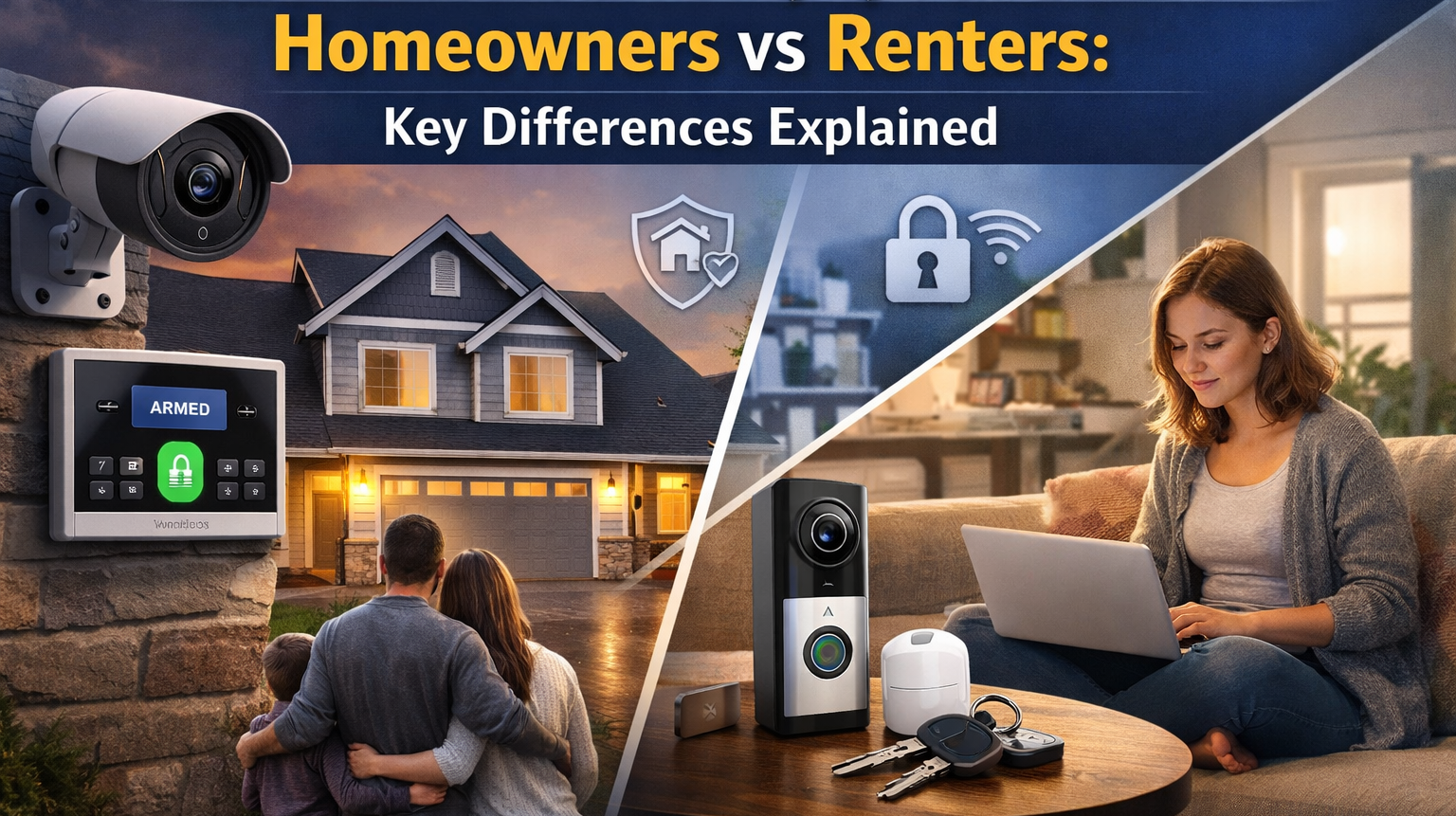
Choosing a home security system isn’t a one-size-fits-all decision. What works perfectly for a homeowner with a backyard and garage might be a terrible fit for a renter living in a small apartment. Yet, many people overlook this crucial difference and end up with a system that’s either too restrictive, too expensive, or just plain inconvenient.
Whether you own your home or rent your space, your living situation plays a huge role in determining the right security setup. From installation methods to contracts and portability, the differences are bigger than most people realize. Let’s break it all down in a simple, practical way - so you can protect your home without headaches or regrets.
Why Homeownership Status Matters in Home Security
Your ownership status affects:
- How much control you have over the property
- Whether you can drill holes or hardwire systems
- How long you plan to stay
- Your tolerance for long-term contracts
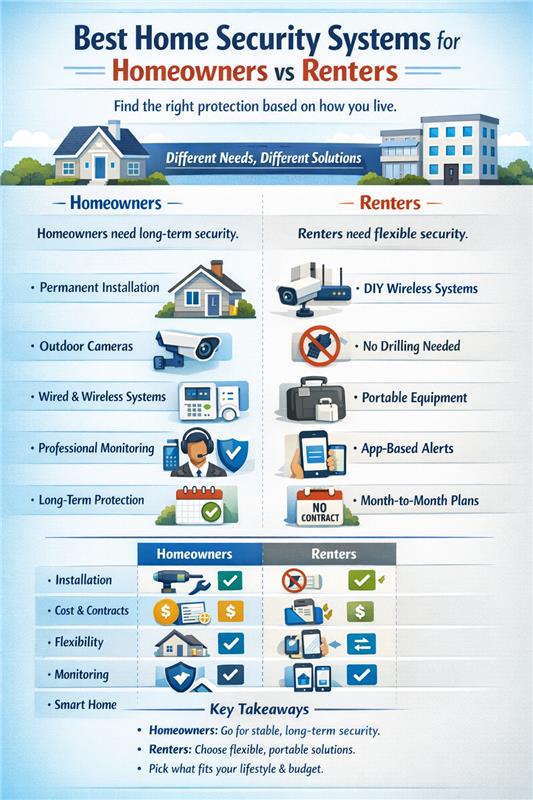
Homeowners typically think long-term. Renters usually need flexibility. That single difference shapes everything else.
Understanding Home Security Systems at a Basic Level
At their core, most home security systems include:
- Entry sensors for doors and windows
- Motion detectors
- Cameras (indoor and outdoor)
- A control panel or mobile app
- Monitoring services (professional or self-monitored)
The way these components are installed, paid for, and managed is where homeowners and renters start to diverge.
Home Security Systems for Homeowners: What Makes Them Different
Homeowners have one major advantage - freedom. Since you own the property, you can customize your security system however you like.
◉ Permanent Installations Are an Option
Hardwired cameras, professionally installed sensors, and outdoor systems are all fair game. You don’t need to worry about damaging walls or violating lease agreements.
◉ Long-Term Value Matters
Homeowners often choose systems that add long-term value to the property, even boosting resale appeal.
◉ Whole-Property Coverage
Garages, basements, sheds, fences, and yards can all be secured without restriction.
Best Security Features for Homeowners
Homeowners benefit most from:
- Hardwired outdoor cameras
- Video doorbells
- Smart locks
- Glass-break sensors
- Integrated smart home systems
These features work best when you don’t plan on moving anytime soon.
Best Home Security Systems
Home Security Systems for Renters: What Sets Them Apart
Renters face a different reality. You’re living in someone else’s property, which means rules matter.
◉ Non-Invasive Installation Is Key
Most landlords prohibit drilling holes or permanent modifications. Renters need peel-and-stick sensors, wireless cameras, and damage-free mounting.
◉ Portability Is Essential
If you move, your security system should move with you - easily.
◉ Short-Term Commitment
Renters usually avoid multi-year contracts due to uncertain living plans.
Best Security Features for Renters
Renters should prioritize:
- Wireless indoor cameras
- Battery-powered sensors
- App-based control systems
- Self-monitoring options
- Easy removal and reinstallation
Think lightweight, flexible, and landlord-friendly.
Installation Differences: Homeowners vs Renters
◉ For Homeowners
- Professional installation is common
- Hardwiring is allowed
- Outdoor drilling is not an issue
- Systems can be deeply integrated
◉ For Renters
- DIY installation is preferred
- No drilling or permanent wiring
- Indoor-only setups are common
- Temporary mounts are essential
Installation freedom is one of the biggest dividing lines between the two.
Contract Considerations: Long-Term vs Flexible Plans
◉ Homeowners and Contracts
Homeowners are more likely to choose long-term contracts because:
- They plan to stay put
- Long-term contracts offer lower monthly fees
- Equipment is often included
◉ Renters and Contracts
Renters typically prefer:
- Month-to-month monitoring
- No cancellation penalties
- The ability to stop service anytime
Flexibility beats savings when your address may change.
Cost Differences You Should Expect
◉ Upfront Costs
- Homeowners may pay more initially for professional installation
- Renters usually pay less upfront with DIY systems
◉ Monthly Costs
- Homeowners often enjoy lower monthly fees
- Renters may pay slightly more for flexibility
◉ Long-Term Costs
Homeowners generally save money over time, while renters pay for convenience and mobility.
Outdoor Security: A Major Divider
Outdoor security is where homeowners truly shine.
◉ For Homeowners
- Yard cameras
- Driveway monitoring
- Garage security
- Floodlights and motion sensors
◉ For Renters
- Limited or no outdoor installations
- Indoor cameras facing entry points
- Door and window sensors only
If outdoor protection matters to you, owning the property makes a huge difference.
Smart Home Integration: Who Benefits More?
Homeowners often integrate security with:
- Smart thermostats
- Smart lighting
- Smart locks
- Voice assistants
Renters can still enjoy smart features, but usually on a smaller, more portable scale.
Privacy and Permission Concerns
Renters must be careful about:
- Recording shared hallways
- Installing cameras outside apartments
- Capturing neighbor activity
Homeowners have more control but still need to respect local privacy laws.
Moving With Your Security System
◉ Homeowners
Moving usually means leaving the system behind or starting fresh at the new property.
◉ Renters
Portability is a major advantage. Most renter-friendly systems are designed to pack up and reinstall easily.
If moving is on the horizon, renter-focused systems win hands down.
Common Mistakes Homeowners Make
- Overpaying for features they don’t need
- Locking into outdated technology
- Ignoring future upgrades
- Over-securing low-risk areas
Bigger isn’t always better.
Common Mistakes Renters Make
- Choosing systems with long contracts
- Installing prohibited equipment
- Ignoring landlord policies
- Overlooking portability
Flexibility should always come first.
How to Choose the Right System for Your Situation
Ask yourself:
- How long will I live here?
- Can I drill or hardwire?
- Do I need outdoor coverage?
- Do I want professional monitoring?
- How important is portability?
Your answers will point you in the right direction.
The Bottom Line: One Home, Two Very Different Needs
Homeowners and renters may both want safety, but the path to achieving it looks very different. Homeowners benefit from permanent, fully integrated systems that protect large properties long-term. Renters need lightweight, flexible, non-invasive systems that adapt as life changes.
The best home security system isn’t the most expensive or popular - it’s the one that fits your living situation perfectly.
FAQs
Q. Can renters install home security systems without landlord approval?
Many renter-friendly systems do not require approval, but always check your lease first.
Q. Are home security systems worth it for renters?
Yes. Portable, DIY systems offer strong protection without long-term commitment.
Q. Do homeowners need professional monitoring?
Not always, but it adds convenience and faster emergency response.
Q. Can renters use outdoor cameras?
Usually not, unless explicitly approved by the landlord.
Q. Which option is more cost-effective long-term?
Homeowners generally save more over time, while renters pay for flexibility.